

¿Qué es un saque de esquina (córner) en el fútbol?
Un córner se concede al equipo atacante cuando el balón sale por la línea de gol tras tocar por última vez a un defensor, sin que haya gol. Se lanza desde el arco de esquina más cercano a donde salió el balón y es una ocasión de oro para marcar de centro.
- 1El córner se concede cuando todo el balón cruza la línea de gol, por el suelo o por el aire, habiendo tocado por última vez a un defensor, sin gol[1]
- 2Se lanza desde dentro del arco de esquina más cercano a donde el balón cruzó la línea[1]
- 3Se puede marcar gol directamente de un córner[1]
- 4El balón está en juego en cuanto se golpea y se mueve claramente[1]
El córner es una de las mejores ocasiones de gol a balón parado del fútbol.
¿Cuándo se concede un córner?
Cuando el balón cruza la línea de gol sin entrar y el último en tocarlo fue un defensor, el equipo atacante saca de esquina. Si lo tocó por último un atacante, es saque de puerta.
¿Desde dónde se lanza?
Desde el pequeño arco de cuarto de círculo de la esquina más cercana a donde salió el balón. Desde ahí, normalmente se centra al área.
¿Se puede marcar directo de córner?
Sí: el córner puede entrar directo sin que nadie más lo toque. Lo más habitual es que los jugadores altos invadan el área para rematar de cabeza o volea el centro.
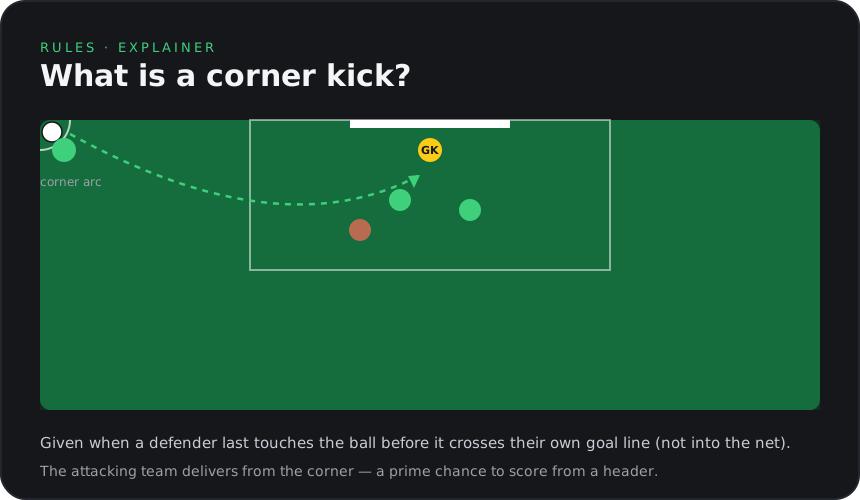
Un córner es una jugada a balón parado, muy parecida a una jugada diseñada tras una interrupción: todo se detiene, ambos equipos colocan sus posiciones y el atacante ejecuta una rutina ensayada —jugadores altos irrumpiendo en el área— para intentar marcar con el envío.
Conclusiones Clave
- El córner se concede al equipo atacante cuando el balón sale por la línea de meta tras tocar a un defensor.
- Se lanza desde el área de esquina y es una gran ocasión para marcar de centro.
- IFAB — Law 17: The Corner Kick(consultado 2026-06-01)
- IFAB — Law 9: The Ball In and Out of Play(consultado 2026-06-01)