

What is VAR in soccer?
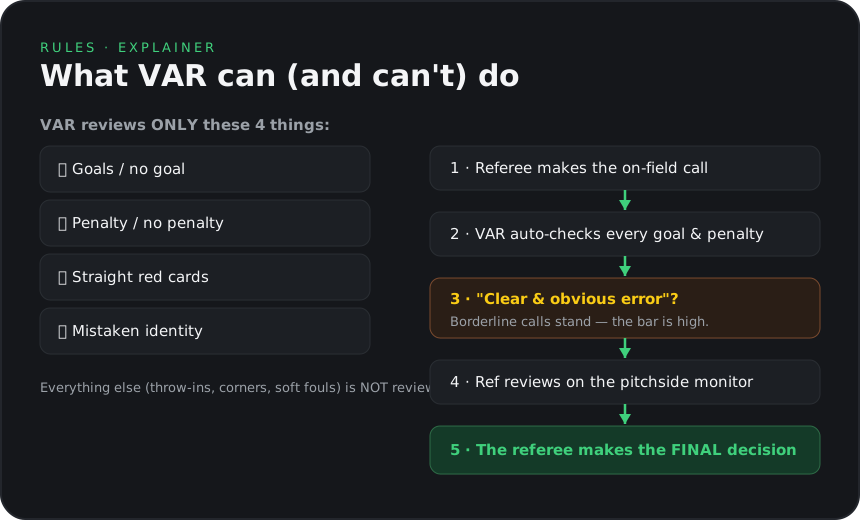
VAR (Video Assistant Referee) is a team of officials who review video to help the on-field referee fix clear mistakes. It can only step in on four things: goals, penalties, straight red cards, and mistaken identity. The referee always makes the final call.
- 1VAR may only assist with four categories of decisions: goals/no goal, penalty/no penalty, direct (straight) red cards, and mistaken identity[1]
- 2The referee's original decision is overturned only for a 'clear and obvious error' or a 'serious missed incident'[1]
- 3Every goal and potential penalty is checked automatically, so players and coaches cannot request a review[1]
- 4The on-field referee always makes the final decision, after a pitchside monitor review if needed[2]
VAR brought instant replay to soccer, and it has been dividing fans ever since.
What is VAR?
VAR (Video Assistant Referee) is a team of officials in a video room who watch replays and help the on-field referee fix clear mistakes. They advise; they don't referee the game themselves.
What can VAR review?
Only four match-changing things: goals, penalty decisions, straight (direct) red cards, and mistaken identity. It can't be used for throw-ins, corners or a second yellow card.
Who makes the final decision?
Always the on-field referee. After a VAR alert, the referee can check a pitchside monitor and then decides — VAR never overturns a call on its own.
Why do fans have mixed feelings about it?
Reviews can delay the game and mute the instant joy of a goal, and tight calls still spark argument. Supporters say it gets the big decisions right more often.
VAR is closest to the NFL's instant-replay booth, but with one big difference: in the NFL a coach throws a challenge flag, while in soccer the VAR team reviews everything on its own — nobody has to ask. Think of it like the replay official who buzzes down to the head referee, except soccer fans are used to celebrating goals instantly, so the wait feels jarring in a way an NFL review never does.
Key Takeaways
- VAR only steps in for clear errors on four things: goals, penalties, straight reds, and mistaken identity.
- The on-field referee always makes the final call — VAR only advises.
- IFAB — Video Assistant Referee (VAR) protocol(accessed 2026-06-01)
- IFAB — Law 5: The Referee(accessed 2026-06-01)