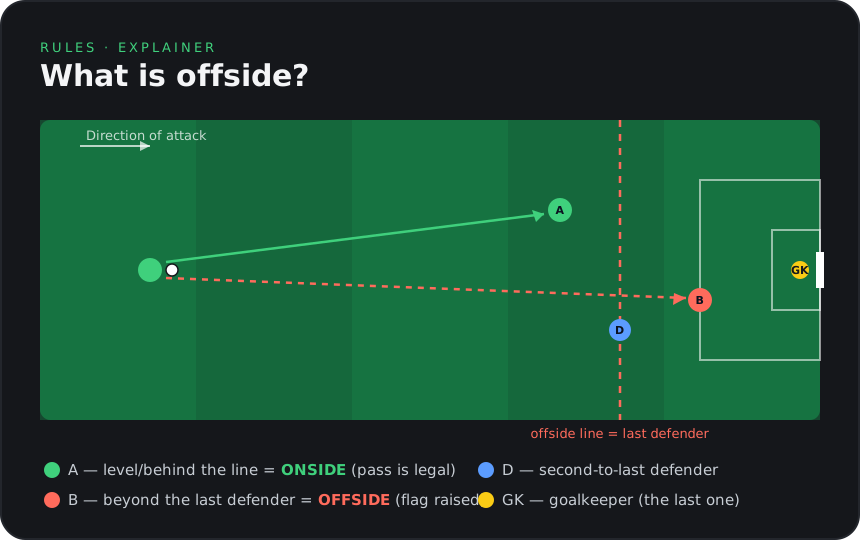

What is offside in soccer?
A player is offside if they're nearer the opponents' goal line than both the ball and the second-to-last defender when a teammate plays the ball to them. Being offside isn't automatically a foul — it's only punished if the player gets involved in the play.
- 1A player is in an offside position if any part of the head, body or feet is nearer the opponents' goal line than both the ball and the second-last opponent[1]
- 2Being in an offside position is not an offence by itself[1]
- 3It is only penalised if the player becomes involved in active play, e.g. by playing the ball or interfering with an opponent[1]
- 4Hands and arms are not counted; the offence is punished with an indirect free kick[1]
Offside is the rule newcomers find hardest, but the idea is simple: you can't camp behind the last defender waiting for a pass.
What does offside mean?
A player is offside if they're closer to the opponents' goal line than both the ball and the second-to-last defender at the moment a teammate plays the ball to them.
Is being offside always a foul?
No — it's only punished if the player then gets involved, by receiving the ball or interfering with a defender. You can stand in an offside position all day until you join the action.
How is it punished and judged?
The other team gets an indirect free kick. Arms and hands don't count for offside, which is why you see those razor-thin VAR lines drawn at the shoulder.
There is no exact NFL equivalent, but think of it as a rule that bans the deep 'cherry-picking' route: you can't loiter behind the last defender for an easy pass the way a receiver might streak past coverage. The attacker has to time the run to stay level with the defense.
Key Takeaways
- You're offside if you're past the second-to-last defender when a teammate plays you the ball.
- It's only punished if you get involved in the play — standing offside alone is not a foul.
- IFAB — Law 11: Offside(accessed 2026-06-01)
- IFAB — Law 13: Free Kicks(accessed 2026-06-01)